India’s domestic aviation market is one of the fastest-growing in the world. In 2024, domestic airlines collectively carried over 161 million passengers — a 6.12% jump from the previous year, according to the Directorate General of Civil Aviation (DGCA). Two carriers have long shaped that growth story: IndiGo and SpiceJet.
IndiGo is the undisputed market leader. SpiceJet, despite a turbulent few years, is fighting to reclaim its footing. Whether you fly every week for business or book once a year for a holiday, knowing what separates these two airlines can save you money, time, and frustration.
Here’s a head-to-head breakdown across every dimension that matters to a traveller.
Fleet Size and Aircraft Types
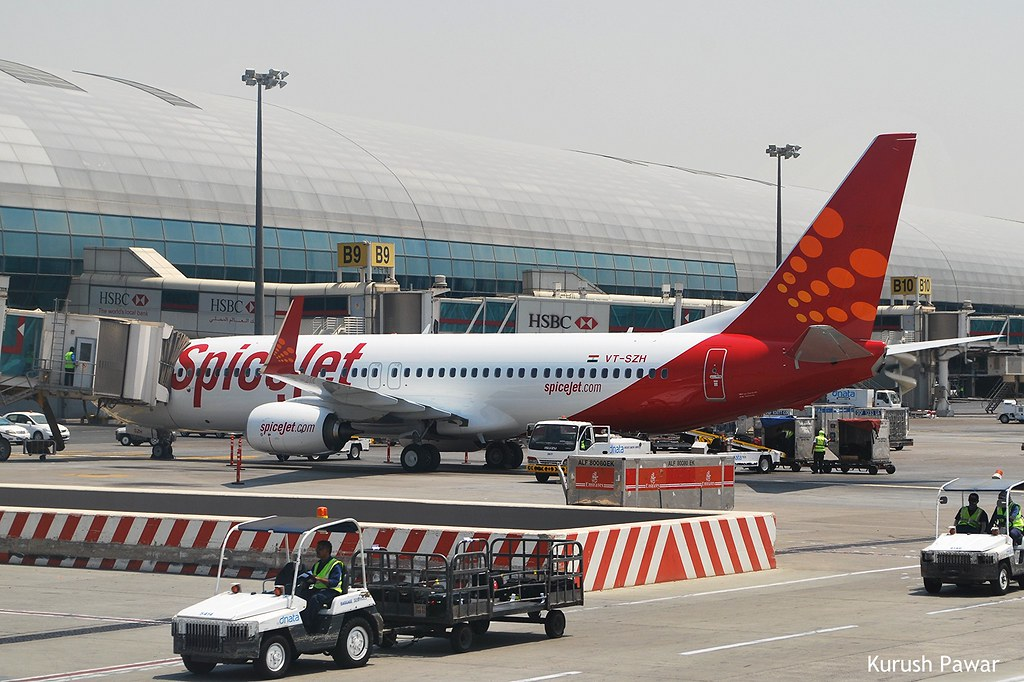
The size and age of an airline’s fleet tells you a great deal about reliability and passenger comfort.
IndiGo operates one of the largest fleets of any low-cost carrier in Asia. As of early 2026, the airline runs 425 active aircraft with an impressively young average age of just 4.8 years. The backbone of the fleet is the Airbus A320 family — primarily A320neos and A321neos — complemented by ATR 72-600 turboprops for regional routes. IndiGo has also added Boeing 787-9 Dreamliners for longer-haul international operations, signalling a strategic push beyond its budget-carrier roots.
SpiceJet operates a considerably smaller fleet, built around Boeing 737-800s, Boeing 737 MAX 8s, and Bombardier Q400 turboprops. The airline has had a difficult stretch operationally — a significant portion of its aircraft were grounded due to financial constraints — but a Rs. 3,000 crore fundraise in 2024 has allowed it to begin ungrounding aircraft. SpiceJet’s annual report notes plans to build toward a 100-aircraft fleet by 2026 and an order book of 147 Boeing 737 MAX aircraft, so expansion is on the agenda.
Verdict: IndiGo wins on scale, fleet age, and network capacity. SpiceJet’s recovery is real but still in progress.
On-Time Performance and Reliability
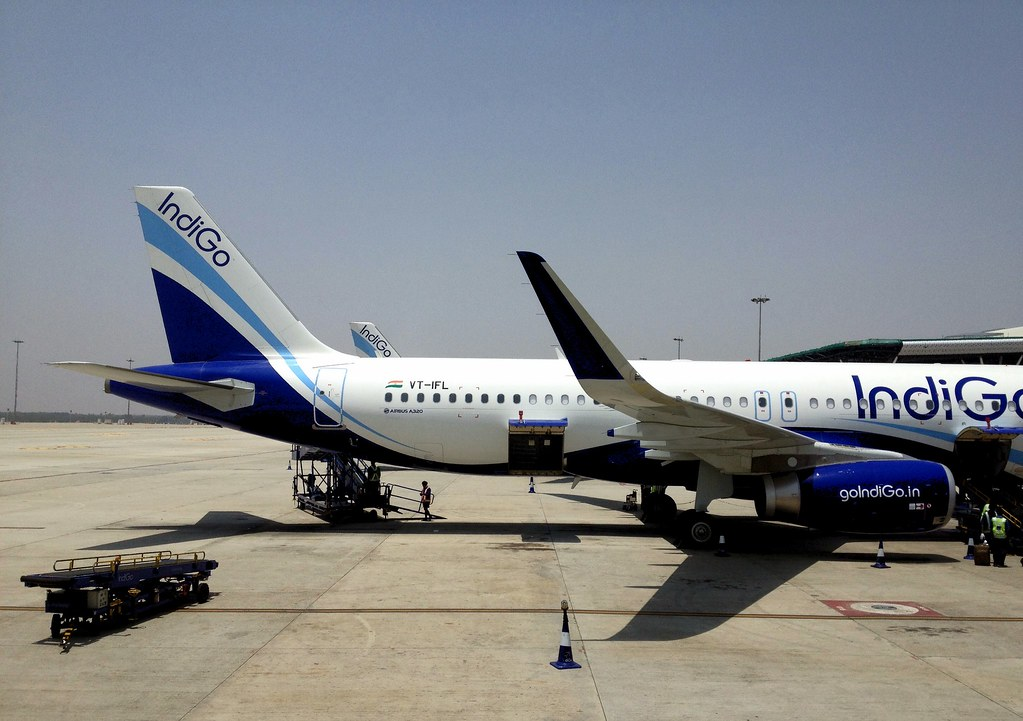
Punctuality is non-negotiable for frequent flyers, and the data here is stark.
According to DGCA traffic data for 2024, IndiGo maintained its position as the most punctual domestic airline in India. A Cirium report covering 2024 recorded IndiGo’s on-time performance (OTP) at 78.12% across more than 800,000 flights for the year. By September 2025, the airline’s OTP at major metro airports had climbed even higher to 87.4%, according to DGCA monthly data — ranking it as the top performer among all scheduled domestic carriers.
SpiceJet’s OTP numbers have been noticeably lower, partly due to its grounded fleet challenges and reduced flight frequency. The DGCA complaint data for December 2024 tells another compelling story: IndiGo recorded just 0.2 complaints per 10,000 passengers, while SpiceJet logged 4.2 complaints per 10,000 passengers — more than 20 times higher.
Verdict: IndiGo is the clear leader on reliability. If delays and disruptions cost you more than the ticket price, that gap matters.
Passenger Experience: Cabin Comfort and In-Flight Meals
Both airlines operate as low-cost carriers (LCCs), so neither offers a premium experience by default. That said, there are meaningful differences.
IndiGo has built its brand on no-frills efficiency. Seats on A320neo aircraft offer approximately 29–30 inches of seat pitch in economy — standard for the LCC segment. The cabin is generally clean and well-maintained given the young average fleet age. Meals and snacks are available for purchase but not included in standard fares. IndiGo has incrementally improved its ancillary offerings, including pre-bookable meals and seat selection.
SpiceJet has historically tried to differentiate on in-flight experience relative to its ultra-low-cost peers. The airline was among the first Indian LCCs to offer wireless on-board entertainment and to introduce gender-neutral cabin announcements. It once partnered with Michelin-starred chef Vikas Khanna for a limited-edition in-flight menu, with proceeds supporting an NGO. On Q400 aircraft used for regional routes, the cabin is smaller and overhead bin space is tighter — worth noting if you’re flying on a regional connection.
Verdict: On a full-size Boeing 737 or A320, the in-flight experience is broadly comparable. SpiceJet has shown more creativity with its service touches, though consistency has varied. IndiGo’s fleet modernity gives it an edge in cabin freshness.
Pricing, Baggage Policies, and Loyalty Programs
Baggage
Both airlines offer identical standard allowances domestically:
- Hand baggage: 7 kg per passenger
- Checked baggage: 15 kg per passenger (free)
The difference shows up in excess baggage pricing. SpiceJet charges INR 1,935 for a pre-booked additional 3 kg on domestic routes, scaling to INR 6,450 for 10 kg. IndiGo’s excess baggage fees are structured similarly, with a standard rate of INR 600 per kg for domestic connecting itineraries. Pre-booking excess baggage is cheaper than paying at the airport on both carriers.
One SpiceJet-specific option worth knowing: its Carry More On-Board add-on lets passengers pay to bring up to 5 additional kg in the cabin, capping total hand baggage at 12 kg — useful if you want to avoid checked luggage altogether.
Loyalty Programs
IndiGo runs the BluChip frequent flyer program, which allows members to earn points on flights and redeem them for future bookings, seat upgrades, and ancillary services.
SpiceJet manages its loyalty program through a subsidiary called Spice Club Private Limited, as noted in its 2023–24 annual report. The program offers similar earn-and-redeem mechanics for regular flyers.
Neither program rivals the depth of full-service carrier loyalty schemes, but for frequent domestic travellers, IndiGo’s BluChip has broader utility given the airline’s larger route network.
Verdict: Baggage policies are a draw at the base level. IndiGo’s loyalty program is more valuable for frequent flyers simply because IndiGo flies to more places.
Network Connectivity
IndiGo connects passengers to a massive domestic and international network. With 425+ aircraft, IndiGo operates flights from Tier 1 hubs like Delhi, Mumbai, and Bengaluru to smaller Tier 2 and Tier 3 cities across India, as well as international routes spanning Southeast Asia, the Middle East, Central Asia, and beyond. The airline held a 61.9% domestic market share throughout 2024, per DGCA data — a dominance that translates directly to more flight options and greater frequency on popular routes.
SpiceJet operates 38 domestic destinations and a limited number of international routes, including services to Dubai, Sharjah, Jeddah, and a handful of others. The airline is known for operating the maximum number of UDAN (regional connectivity) flights in India, making it a meaningful option for travellers in remote or underserved areas. That’s a genuine point of differentiation, though SpiceJet’s overall domestic market share in 2024 hovered between just 2–5%, down sharply from prior years.
Verdict: IndiGo wins on scale, frequency, and choice. SpiceJet’s UDAN coverage is valuable for regional travellers who may have no other direct option.
Final Verdict: Which Airline Should You Choose?
Neither airline is universally better — the right choice depends on where you’re going and what you value most.
Choose IndiGo if:
- You prioritise punctuality and low complaint rates
- You’re booking popular metro routes and need frequent departure times
- You’re a frequent flyer who benefits from a robust loyalty program
- You want access to a wide international network
Choose SpiceJet if:
- Your destination is served under the UDAN regional connectivity scheme
- You want more flexibility with cabin baggage via the Carry More On-Board option
- You’re price-sensitive and find SpiceJet fares meaningfully lower on your specific route
- You’re open to supporting an airline actively rebuilding its operations
The data from 2024 paints a clear picture: IndiGo is the more reliable, more connected, and more consistent option for most Indian travellers. But SpiceJet’s recovery trajectory is worth watching — and for regional routes, it may simply be the only game in town.