Sometimes when people ask, “can you drive to Alaska,” my brain immediately pictures a huge paper map spread across a table, the kind you used to see in road trip movies. Alaska always sits way up in the corner, detached from the rest of the United States on many maps, which almost tricks your brain into thinking it’s some unreachable island. But then someone reminds you there’s actually a road. The Alaska Highway. And suddenly the idea changes from “faraway wilderness” to “technically possible road trip.”
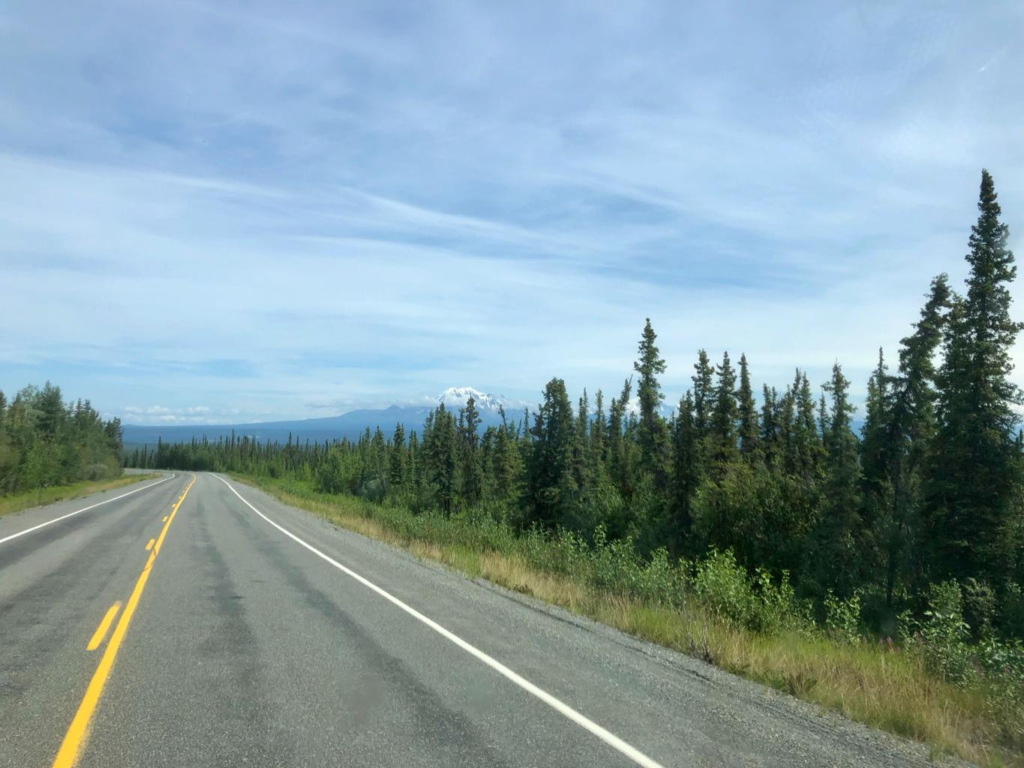
What’s funny is that the first time I realized you could drive there was during some random YouTube rabbit hole about road trips. Someone was driving a Toyota Tacoma from Seattle all the way to Anchorage. The dashboard camera showed endless pine forests and those long empty highways that look like they belong in a survival documentary. At that moment the whole idea of Alaska stopped feeling like a plane-only destination.
But then another thought creeps in. You don’t just drive to Alaska the way you drive to Nevada or Arizona. You literally have to go through Canada. That part always feels strange. If you start in somewhere like Montana or Washington, the road takes you across the Canadian border first, and suddenly you’re in British Columbia or Yukon territory before you ever reach Alaska. So the trip is almost like three trips layered together: the lower United States, then Canada, then Alaska.
I remember hearing about the Alaska Highway, sometimes called the Alcan Highway. Built during World War II. That alone makes the road feel a little legendary, like Route 66 but colder and more remote. Instead of neon diners and old motels like in Arizona, the stops up there are things like truck stops, gas stations with bear warning signs, and random lodges with names like Northern Rockies Lodge or Liard River Hot Springs Lodge.
Gas stations become a weirdly important part of the thought process too. When you think about driving somewhere like Los Angeles to San Francisco, you barely worry about fuel because there’s a Shell or Chevron every few miles. But when people talk about driving to Alaska, they always mention keeping the tank full. Apparently some stretches of the highway can go a long distance without services. That detail always sticks in my head because it changes the psychology of the trip. Suddenly you’re thinking about range and planning instead of just driving.
The vehicles people choose for the trip also come to mind. You rarely hear someone say they drove a tiny hatchback there, although I’m sure someone has tried it. Most stories mention trucks or SUVs. Things like Ford F-150s, Jeep Wranglers, Subaru Outbacks. The kind of vehicles you imagine covered in road dust with a cooler in the back seat and maybe a spare tire strapped somewhere.
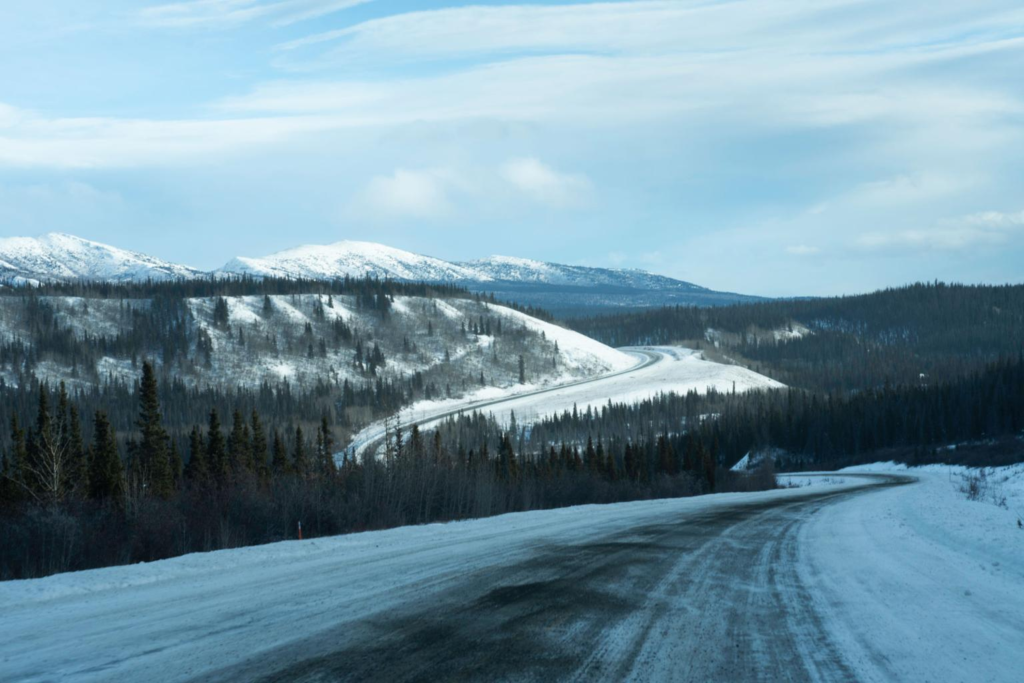
Weather is another thing that always drifts into the thought process. In summer, people say the drive can be beautiful. Long daylight hours, mountains everywhere, lakes that look almost unreal. But in winter the whole idea changes. Snow, ice, temperatures dropping ridiculously low. Driving a normal highway in Ohio during winter is already stressful. Imagining the Alaska Highway in January makes it feel more like an expedition than a road trip.
Then my mind jumps to the distance. Alaska isn’t just “far.” It’s the kind of far where the numbers start sounding unreal. If you start somewhere like Seattle and drive to Anchorage, the trip is roughly 2,200 miles or more depending on the route. That’s like driving from New York to Denver. And that’s assuming smooth travel without delays.
Sometimes I picture someone actually doing the trip slowly, like a long adventure. Maybe stopping in places like Whitehorse in Yukon. I’ve heard Whitehorse is one of those northern towns where the streets are quiet and the scenery feels huge compared to the number of buildings. Probably the kind of place where there’s one main grocery store, a couple hotels, and a coffee shop that locals know by name.
Another random detail that floats into my head is wildlife. Every story about the Alaska Highway seems to involve animals crossing the road. Moose, bears, bison. That’s not something most people think about when planning a road trip in the continental US. You might worry about traffic jams near Chicago, but you don’t usually worry about a moose standing in the middle of the highway.
Hotels along the route must have a strange vibe too. Not the big chain hotels like Marriott or Hilton you see in big cities. Probably smaller roadside places with names like Pioneer Lodge or Yukon River Inn. The kind of places where the lobby smells like coffee and wood smoke and there’s a bulletin board full of flyers for fishing guides or snowmobile tours.
Another thought that comes up is border crossings. Since the route goes through Canada, you need a passport. That’s something a lot of Americans probably don’t think about until they start seriously planning the trip. Imagine packing the car, driving north for hours, then suddenly reaching a border checkpoint somewhere in British Columbia where a Canadian officer asks where you’re headed. Saying “Alaska” probably gets a reaction.
Food during the drive is another oddly specific thing I think about. On normal road trips you might grab McDonald’s or Taco Bell off the interstate. But the Alaska route probably involves a lot of gas station snacks and diner meals. Maybe pancakes at a roadside cafe in Fort Nelson or burgers at some place with mounted antlers on the wall.
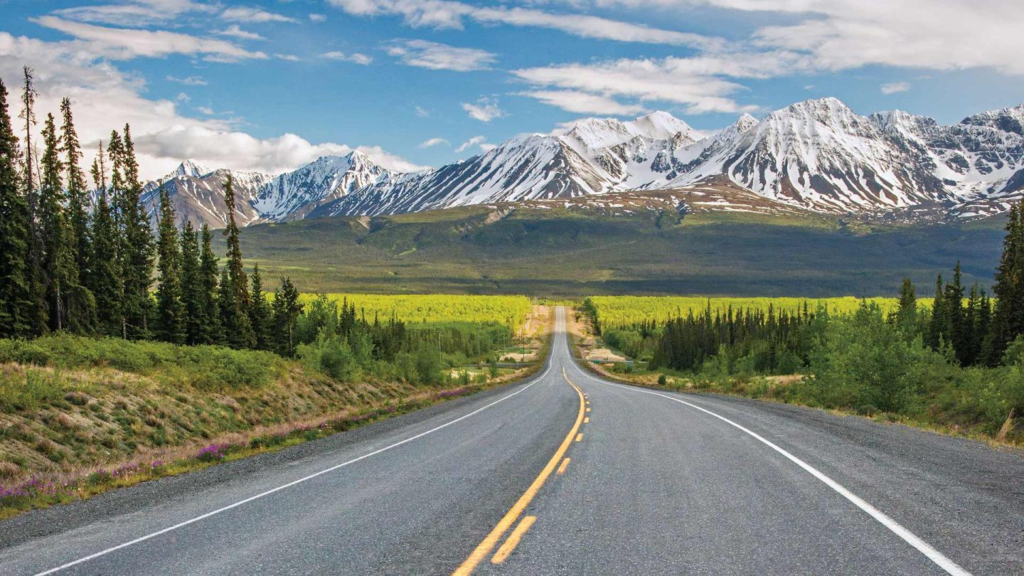
And then there’s the feeling of space. When people describe northern Canada and Alaska, they always mention how empty it feels. Huge forests, mountains, rivers, but very few towns. It’s almost the opposite of driving somewhere like the East Coast where cities blur together.
At some point in the thought process I also start comparing the idea of driving to Alaska versus flying. Flying from somewhere like Los Angeles to Anchorage takes maybe five hours. Driving can take several days. So the comparison becomes less about efficiency and more about experience. One is transportation. The other is a journey.
The Alaska Marine Highway ferries sometimes come up in conversations too. Some people drive part of the way and then take a ferry from places like Bellingham, Washington up to ports in Alaska like Ketchikan or Juneau. That option makes the trip feel even more interesting, like combining a road trip with a small cruise through the Inside Passage.
I also think about the kind of person who decides to drive to Alaska. It doesn’t feel like a casual weekend decision. It feels like something someone plans for months. Maybe retirees in an RV, or adventure travelers documenting the trip on Instagram.
Speaking of RVs, that image shows up a lot in my mind. Big motorhomes parked near lakes with mountains in the background. Campgrounds where people sit outside in folding chairs while the sun sets at almost 11 p.m. in summer.
And the daylight up there is another strange mental image. In Alaska during summer the sun barely sets. Driving late at night but the sky still glowing faintly. That must make the road trip feel surreal, like time stretches longer than usual.
Another thought jumps in about road conditions. Some parts of the Alaska Highway are fully paved now, but historically sections were rough gravel. That reputation still sticks around in people’s minds, making the drive sound rugged even if parts are smoother today.
Sometimes the idea of the road trip reminds me of those long overland drives people do in places like Australia across the Outback. Different continent, but the same sense of distance and isolation.
And then the thought circles back to the original question: can you drive to Alaska? Yes, clearly you can. Thousands of people do it every year. But the more you think about it, the less it feels like a simple yes-or-no question and more like imagining a whole journey unfolding mile by mile across forests, mountains, borders, and quiet northern towns.
It’s one of those trips where the destination almost becomes secondary to the experience of getting there. The highway itself becomes the story.