Booking a domestic flight in India should be straightforward. Pick a route, compare prices, and confirm your seat. But anyone who has flown frequently within the country knows the reality is messier. Hidden fees appear at checkout. Bags get flagged at the gate. Flights get delayed, and suddenly you’re Googling what you’re actually entitled to.
This comparison cuts through the noise. Using verified, up-to-date policies from both airlines and the DGCA’s own Civil Aviation Requirements, here’s a clear-eyed look at how SpiceJet and Air India stack up across every dimension that matters to the everyday Indian flyer.
Base Fares and Pricing Transparency
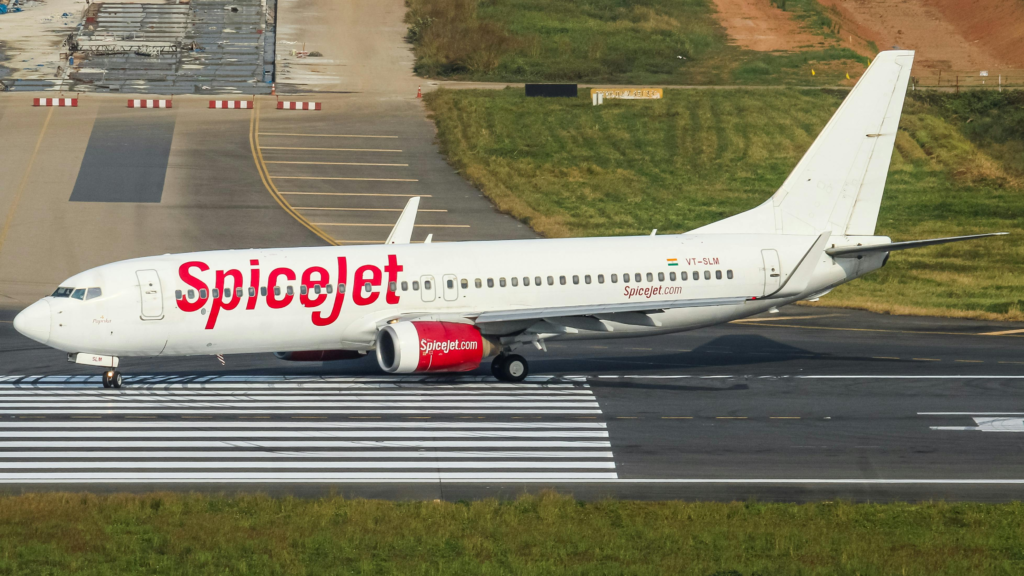
SpiceJet typically advertises lower base fares than Air India, making it the first choice for budget-conscious travelers. But the advertised price and the final checkout price can differ significantly on both carriers once you add seat selection, convenience fees, and meal charges.
Air India’s fare families—Value, Classic, and Flex—are clearly labeled during booking, and the difference in what each includes (primarily baggage and flexibility) is reasonably transparent at the point of purchase. SpiceJet uses a similar bundled-add-on model but its ancillary fees tend to stack up faster, particularly for seat assignment.
Neither airline automatically includes seat selection in its base fare. On SpiceJet, a “preferred seat” requires payment at booking or web check-in; unchoosing a seat means you get whatever is available. Air India follows the same logic for its Value fares. The practical takeaway: the cheapest fare on either airline is rarely the final price you pay.
Price Drop After Booking
Neither SpiceJet nor Air India offers automatic fare adjustments if the price drops after you book. This is standard across Indian carriers. If you booked a ₹4,500 ticket and the same seat is selling for ₹2,800 three days later, you won’t receive a refund for the difference.
Flex fares on Air India allow cancellations and rebooking with reduced fees, which gives you the flexibility to cancel, rebook at the lower fare, and absorb the difference. SpiceJet’s higher fare tiers similarly offer better cancellation terms. For both airlines, the cheapest fare categories come with the harshest change penalties—which are often close to the ticket value itself.
Baggage Policies: What You Actually Get
This is where the differences become concrete.
Checked Baggage (Domestic Economy):
- SpiceJet: 15 kg free, per passenger, for all domestic flights (effective October 24, 2020). Each bag must not exceed 32 kg. The balance weight cannot be redistributed as cabin baggage, and vice versa.
- Air India: Varies by fare brand. The Value fare (economy) includes 15 kg. The Classic fare includes 20 kg. The Flex fare includes 25 kg.
On paper, Air India’s Classic and Flex fares offer more checked baggage. In practice, Value fares on Air India and SpiceJet’s standard domestic tickets start at the same 15 kg baseline.
Cabin Baggage (Domestic Economy):
- SpiceJet: One piece, maximum 7 kg. Dimensions must not exceed 55 × 35 × 25 cm (Boeing) or 50 × 35 × 23 cm (Q400). A laptop bag or ladies’ purse can be carried additionally, provided the total weight does not exceed 7 kg. Oversized or overweight cabin bags at the boarding gate are charged at ₹750 per kg for up to 5 kg extra.
- Air India: One piece, maximum 7 kg in economy. Dimensions: 55 × 40 × 20 cm (total not exceeding 115 cm). One small personal item is permitted additionally (handbag, laptop bag, camera bag, etc.), provided it fits under the seat in front and does not exceed 3 kg.
Both airlines enforce the BCAS “One Hand Baggage Rule.” In practice, Air India’s personal item allowance (up to 3 kg) is somewhat more clearly articulated on its official website, but the operational intent is similar.
Excess Baggage Fees:
SpiceJet charges ₹700 per kg at the airport for excess checked baggage. Pre-booking excess baggage online is significantly cheaper. Air India charges ₹3,000 if cabin baggage exceeds size or weight limits on domestic flights. Always pre-purchase if you know you’re over.
Check-In: Cutoff Times and What Happens If You Miss Them
Both airlines have identical counter closure times for domestic flights—60 minutes before scheduled departure—and both open their airport counters three hours prior to departure.
Web Check-In:
- SpiceJet: Available from the time of booking up to 60 minutes before departure for domestic flights.
- Air India: Opens 48 hours before departure and closes one hour before departure for domestic flights. Bag drop at dedicated counters is available for web check-in passengers.
Air India’s longer web check-in window (48 hours vs. SpiceJet’s from booking) gives it a slight advantage for early planners who want seat options before they disappear.
Missing the counter cutoff on either airline results in a “no-show” designation. Your booking is cancelled and the fare is retained. There is no grace period on domestic routes for either carrier.
Air India’s boarding gates close 20 minutes before departure. SpiceJet’s official FAQ does not publish a specific gate closure time, though anecdotal reports suggest it is similar.
Cabin Comfort and Legroom
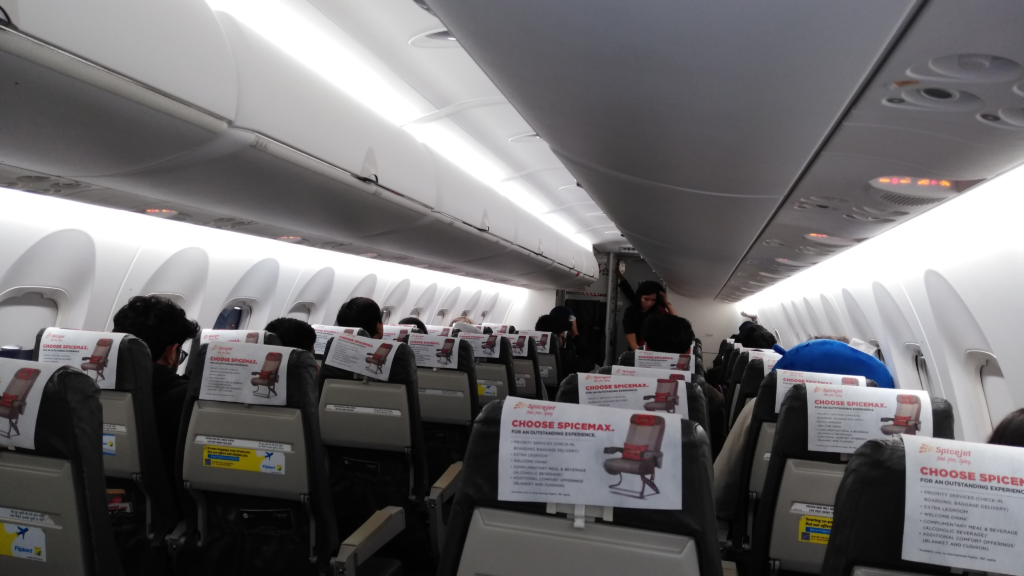
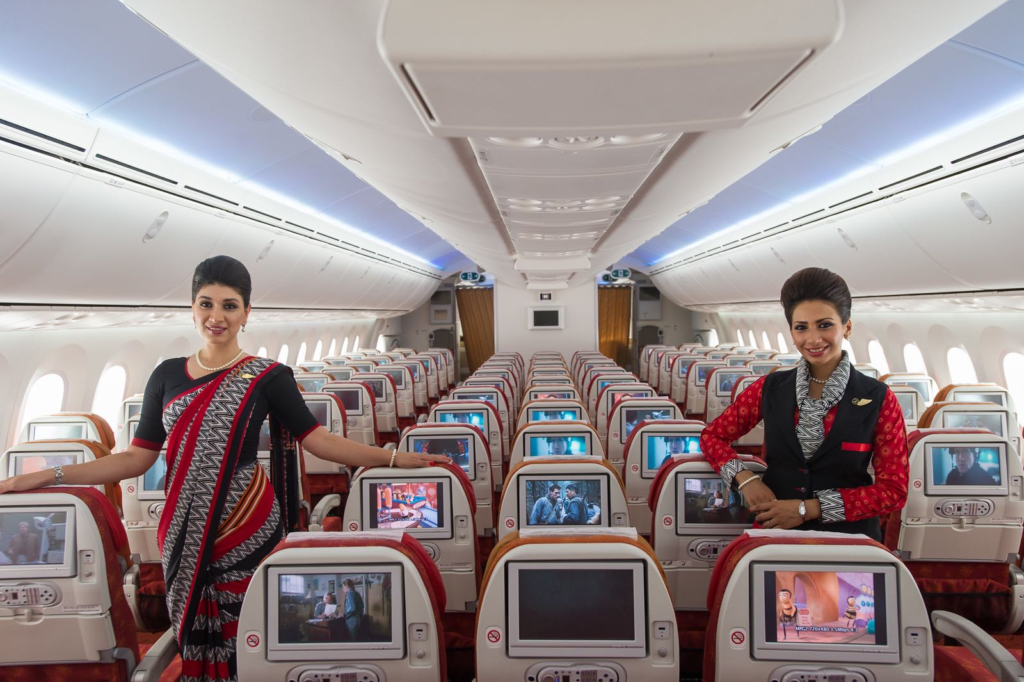
Air India’s fleet, post-Tata acquisition, includes newer aircraft on several domestic routes—particularly the A320neo family—with seat pitch in the range of 30–31 inches in economy. SpiceJet operates a mix of Boeing 737s and Bombardier Q400s. Seat pitch on SpiceJet’s 737s is generally comparable to Air India’s narrowbodies.
For short domestic hops under 90 minutes, the difference is negligible for most passengers. On longer routes—say, Delhi to Kochi or Mumbai to Guwahati—Air India’s overall cabin product, which includes complimentary meals on many domestic routes, provides a more complete experience in economy. SpiceJet charges separately for in-flight meals.
Aircraft Changes After Booking
Both airlines reserve the right to change aircraft type after booking. SpiceJet’s conditions of carriage and FAQ explicitly state that seat assignments can be changed in cases of “exigencies” and that seat fees will be refunded in such cases. Air India has similar provisions.
The practical issue arises when a passenger books a specific seat (say, an exit row or a bulkhead) and the aircraft type changes—seat maps differ between aircraft, and a previously assigned seat may not exist on the replacement plane. Both airlines handle this administratively, but the experience of being reassigned without clear communication is a recurring complaint across both carriers.
Seat Downgrades and Family Seating Separation
Both airlines assign seats based on availability if passengers do not pre-select. Families or groups who book together but skip seat selection may find themselves scattered across the cabin—particularly on high-load routes.
DGCA’s CAR Section 3 Series M Part IV (effective February 15, 2023) addresses downgrading specifically: if a passenger is involuntarily moved to a lower cabin class, the airline must reimburse 75% of the cost of the ticket including taxes for domestic sectors. This applies to both carriers equally as a regulatory floor.
However, seat separation within the same cabin class—where a family books together but sits in different rows—is not covered by the downgrading clause. Neither airline guarantees adjacent seating without a paid seat selection, and both airlines recommend pre-booking seats at the time of purchase to avoid this situation. SpiceJet’s FAQ is explicit on this point.
Airport Terminal Changes
Under DGCA CAR Section 3 Series M Part IV, if an airline moves a flight to an alternate airport or terminal and informs the passenger with less than six hours’ notice, the airline must cover the transfer cost from the original airport or terminal to the new one. If the change is communicated at least six hours in advance, the passenger is responsible for their own transfer.
Both SpiceJet and Air India are bound by this rule. At large airports like Delhi (Indira Gandhi International), terminal changes between T1 and T2/T3 can add significant travel time. Check your terminal on your boarding pass—it may differ from the terminal listed at the time of booking.
Passenger Rights: What DGCA Actually Guarantees
The DGCA’s Civil Aviation Requirements (CAR Section 3, Series M, Part IV, effective February 15, 2023) establish a clear framework that applies equally to SpiceJet and Air India. Here is what you are entitled to:
Denied Boarding:
- If an alternate flight departs within one hour of your original departure: no compensation owed.
- Within 24 hours: 200% of one-way basic fare plus fuel charge, capped at ₹10,000.
- More than 24 hours later, or if you choose not to travel: 400% of one-way basic fare plus fuel charge, capped at ₹20,000, plus a full refund.
Flight Cancellation:
- If the airline notifies you less than 24 hours before departure without arranging an alternate: compensation of ₹5,000 (for flights up to 1 hour block time), ₹7,500 (1–2 hours), or ₹10,000 (over 2 hours), whichever is less than the one-way basic fare plus fuel charge—plus a full refund.
Delays:
- Meals and refreshments are required once delays hit 2 hours (for flights under 2 hours block time), 3 hours (2–5 hours block time), or 4 hours (longer flights).
- For domestic delays exceeding 6 hours, the airline must offer either an alternate flight within 6 hours or a full refund.
- Hotel accommodation (with transfers) is mandatory when a delay exceeds 24 hours, or exceeds 6 hours for flights scheduled between 2000 and 0300 hrs.
Force majeure events—including weather, ATC decisions, and security risks—exempt airlines from compensation obligations. This exemption is frequently cited by both carriers, so document your delay reasons carefully.
If an airline fails to comply, passengers can file a grievance via the Air Sewa App or Portal, or escalate to the airline’s Nodal Officer. Details of each airline’s Nodal Officer must be displayed on their respective websites.
App and Digital Experience
Air India’s app allows web check-in for both domestic and international flights, seat selection, boarding pass access, and flight status tracking. Its AI chatbot, AI.g, is available via the website, app, and WhatsApp (at wa.me/9667034444) for check-in assistance.
SpiceJet’s app covers web check-in, seat selection, manage booking, and boarding pass retrieval. Both apps are functional, but Air India’s post-Tata revamp has delivered a more polished interface for most users. The city check-in facility offered by Air India—where passengers can check in, drop baggage, and collect boarding passes before heading to the airport—is a meaningful differentiator that SpiceJet does not currently match.
Customer Support During Disruptions
When things go wrong, both airlines leave passengers navigating call centre queues. SpiceJet’s customer relations team can be reached at +91-124-4983410 or +91-124-7101600. Social media escalations on X (formerly Twitter) often produce faster responses than phone lines for both carriers.
Air India’s AI.g chatbot handles a wide range of queries, including disruption-related ones, and its WhatsApp channel provides an additional contact point. Neither airline has a strong reputation for proactive, real-time communication during irregular operations—but Air India’s operational footprint and resources give it a marginal edge in rebooking passengers during major disruptions.
The Final Verdict: Which Airline Suits You Better?
There is no single answer—and that is the honest one.
Choose SpiceJet if: Your primary goal is keeping the base fare down, your route is short, you travel light, and you are comfortable pre-selecting your seat and meals as add-ons. Just go in with eyes open about ancillary fees and the no-frills nature of the product.
Choose Air India if: You want a more complete in-cabin experience, are carrying 20–25 kg of checked baggage and want it included in the base fare (Classic or Flex), plan to use web check-in early, or frequently fly longer domestic routes where meals and a more recent cabin product make a difference.
Regardless of which carrier you fly, the DGCA’s passenger protections apply equally. Know your rights, keep your booking confirmation with contact details on file, and use the Air Sewa App if you need to escalate a complaint. No airline is above the rules—even if they sometimes act like they are.