Picking an airline for Hawaii travel used to be straightforward. Hawaiian Airlines was the obvious local choice, and Southwest was the mainland budget option trying to break into the market. Today, the picture is far more nuanced—Southwest now operates interisland routes, offers assigned seating, and is mid-way through a major cabin overhaul. Meanwhile, Hawaiian has merged with Alaska Airlines and rolled out free Starlink Wi-Fi across its widebody and narrowbody fleet.
So which airline actually comes out ahead? The answer depends heavily on what you value. This guide breaks down every major comparison point—seat pitch, baggage fees, check-in deadlines, Wi-Fi, DOT reliability data, and more—so you can make a decision based on facts rather than brand loyalty.
Seating and Comfort: Seat Pitch, Cabin Layout, and Aircraft Type
This is where the two airlines diverge most sharply, and it matters far more than most travelers expect.
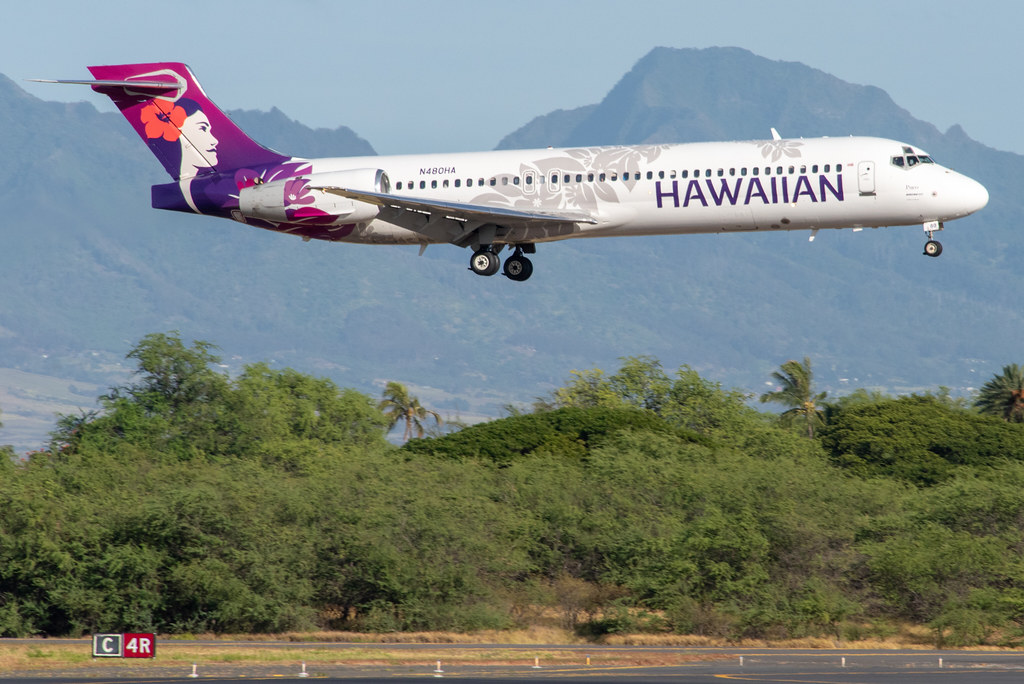
Hawaiian Airlines operates its interisland Neighbor Island service on the Boeing 717-200. The aircraft seats 123–128 passengers in a 2-3 configuration. Main Cabin seat pitch runs from 29 to 31 inches, and the seats recline 6 inches or are pre-reclined to 20 degrees. First Class on the 717 sits at a notably more generous 37-inch pitch in a 2-2 layout. For mainland routes, Hawaiian uses the Airbus A321neo, which comes equipped with Starlink Wi-Fi and generally offers slightly more modern cabin finishes.
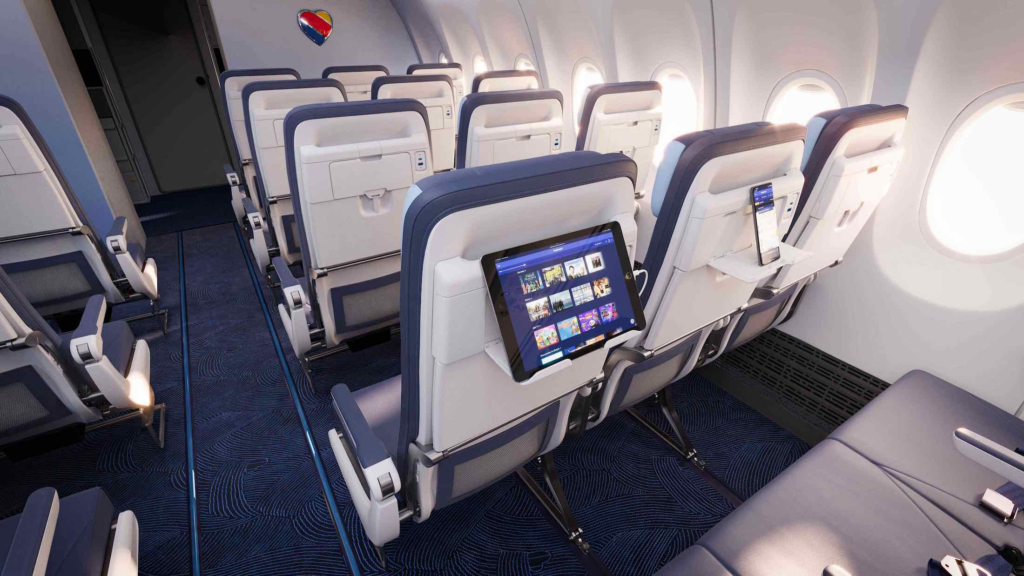
Southwest Airlines is mid-transition. Its workhorse fleet consists of Boeing 737-700s and 737-800s, with new Boeing MAX 8 deliveries now arriving with updated interiors. Southwest recently introduced RECARO R2 seats on new aircraft deliveries, and its Extra Legroom seats offer up to five additional inches compared to standard seats—though exact pitch varies by aircraft type and Southwest has not published a single standardized number for all variants. In-seat USB-A and USB-C power ports are now standard on new delivery aircraft, and larger overhead bins are part of the refresh.
For short interisland hops—typically 20 to 45 minutes in the air—the difference in seat pitch matters less than on a five-hour mainland flight. Still, if you’re over six feet tall, Hawaiian’s First Class upgrade for Neighbor Island flights ($50 each way) is worth considering.
Baggage and Fees: Where the Real Cost Gap Emerges
The single biggest practical difference between these two airlines comes down to checked bags, and Southwest has a clear structural advantage here.
Southwest allows two free checked bags on interisland flights, including sports equipment. Its standard checked bag size limit is 62 linear inches (length + width + height), up to 50 lbs. Carry-on bags must fit within 24″ × 16″ × 10″ (wheels and handles included), and one personal item is also permitted at no charge.
Hawaiian Airlines charges for checked bags on Neighbor Island routes:
- 1st checked bag: $30
- 2nd checked bag: $40
- Each additional bag: $50
These fees apply for flights purchased before October 14, 2025, or departing before January 2, 2026. Passengers who pre-pay baggage fees online between 24 hours and 4 hours before departure can access a $30 prepay rate on the first bag. Excess weight fees on interisland routes add up fast: bags between 51–70 lbs cost an extra $35, and those in the 71–100 lb range carry a $70 surcharge. Oversize bags (62–115 linear inches) add another $35 on Neighbor Island routes.
For a family of four each checking a bag on an interisland round trip, that’s $240 in baggage fees on Hawaiian versus $0 on Southwest. Over the course of a multi-island trip, that gap becomes a significant budget consideration.
Hawaiian’s carry-on policy follows standard dimensions but does not publish a single explicit size limit in the same format as Southwest’s help center documentation. Check directly before flying.
Same-Day Changes and Refunds: Both airlines have eliminated change fees on most fare types. Hawaiian charges no change fee on Main Cabin, First Class, and Business Class tickets, though fare differences may apply. Refund fees on restricted refundable fares are $25 for Neighbor Island and $100 for mainland/international routes. Exact refund processing timelines are not published by either airline as a standard number of days; credit card refunds are typically faster than bank transfer refunds.
Booking Logistics: Check-In Deadlines, Mobile Apps, and Airport Timing
Getting your check-in timing wrong can result in missed flights. The rules differ meaningfully between the two carriers.
Hawaiian Airlines online check-in opens 24 hours before departure and closes 1 hour prior to departure for all flights. Checked bags cannot be accepted more than 4 hours before departure. For Neighbor Island flights, the airport cut-off is 30 minutes prior to departure—all check-in steps must be completed by then. For North America routes, the cut-off is 45 minutes. Arriving at the check-in lobby is recommended at least 90 minutes before interisland flights and 2.5 hours before mainland departures. All passengers must be at the gate at least 30 minutes before departure or risk denied boarding.
Southwest Airlines also opens online check-in 24 hours before departure. The domestic check-in deadline is 30 minutes before scheduled departure, and international is 60 minutes (75 minutes for Aruba). Passengers who miss these windows must be rebooked on the next available flight. All passengers must be at the gate at least 10 minutes before departure.
The check-in experience on Southwest has changed significantly in 2025 and 2026. Southwest transitioned from its long-running open seating model and A/B/C boarding groups to assigned seating beginning January 27, 2026. Boarding groups now run from 1 to 8, determined by seat location, fare type, tier status, and Rapid Rewards credit card benefits:
- Groups 1–2: A-List Preferred, Choice Extra fare, Extra Legroom seat purchases
- Groups 3–5: A-List members, Choice Preferred fare, Rapid Rewards Cardmembers (no earlier group)
- Groups 6–8: Choice and Basic fare passengers
Priority Boarding is available for purchase starting 24 hours before departure. Everyone on the same reservation (up to nine passengers) receives the same boarding group. Southwest has replaced its familiar numbered metal stanchions at gates with two alternating boarding lanes and digital displays.
Hawaiian boards in a traditional assigned-seat model, with boarding priority tied to fare class, Atmos Rewards tier, and premium seat purchases.
In-Flight Experience: Wi-Fi, Snacks, and Connectivity
Wi-Fi is one area where Hawaiian Airlines has staked a genuine competitive advantage. The airline completed Starlink installation across its entire Airbus A321neo and A330 fleet and offers the service free of charge—no registration page, no payment portal, no password. Passengers connect the moment they board. Video and voice calls are prohibited, but streaming, gaming, email, and social media all work as they would on a home network. Starlink is not currently available on Hawaiian’s Boeing 717s (used for interisland hops) or its new Boeing 787s, though 787 installation is in progress with Boeing and SpaceX.
Southwest charges $8 per device for Wi-Fi access on most flights. However, the airline announced a major shift: free Wi-Fi for all Rapid Rewards Members via a partnership with T-Mobile, rolling out from October 24, 2025, on Wi-Fi-enabled aircraft. This is a significant value add for frequent Southwest travelers. Interisland flights are notably excluded from the complimentary non-alcoholic snack service that Southwest provides on qualifying flights of 251 miles or more, though this exclusion is specifically for the snack enhancement.
On snack and drink pricing, Hawaiian charges $3.50–$10.50 for snacks and $8.00–$16.00 for alcoholic drinks on North America routes. Complimentary service varies by route. Southwest’s new Extra Legroom seats include enhanced snack options (including Wonderful Pistachios No Shells) and complimentary premium beverages, while standard seats receive the airline’s typical snack selection.
Reliability Metrics: DOT On-Time Performance and Cancellations
The U.S. Department of Transportation publishes monthly data on airline performance, and the numbers favor Hawaiian Airlines by a clear margin.
According to the DOT Air Travel Consumer Report for November 2024, Hawaiian Airlines posted the highest on-time arrival rate of any reporting marketing carrier at 89.2%. Southwest came in third at 86.9%—still a strong showing, but nearly 2.5 percentage points behind.
October 2024 data tells a similar story: Hawaiian’s on-time rate was 86.0% (ranked 3rd), while Southwest posted 85.4% (ranked 4th). For the year-to-date 2024 period, Hawaiian ranked 1st at 83.0%, versus Southwest at 77.6% (ranked 4th).
Cancellation rates in October 2024: Hawaiian cancelled 1.1% of scheduled flights (73 of 6,583), while Southwest cancelled 1.3% (1,546 of 119,251). Both rates are relatively low, but Hawaiian edges ahead on this metric too.
On mishandled baggage, Southwest actually performs better in raw numbers: 0.32 mishandled bags per 100 enplaned in October 2024, versus Hawaiian’s 0.51 per 100. That said, Southwest’s scale is dramatically larger—over 10 million bags enplaned that month versus Hawaiian’s 528,000—which adds operational complexity.
For involuntary denied boarding (bumping), Q3 2024 data shows Hawaiian at 0.01 per 10,000 passengers versus Southwest at 0.03 per 10,000—both impressively low, but Hawaiian again leads.
Loyalty and Value: Atmos Rewards vs. Rapid Rewards
Hawaiian Airlines transitioned its frequent flyer program from HawaiianMiles to Atmos Rewards following its merger with Alaska Airlines, aligning it with Alaska’s Mileage Plan partnership structure and 30+ airline partners. Elite tiers (Silver, Gold, Titanium, Platinum) carry varying checked bag benefits, with Atmos Gold members receiving two free checked bags and Titanium/Platinum members receiving three bags through September 30, 2025. The Hawaiian Airlines World Elite Mastercard offers two complimentary checked bags on Hawaiian-operated flights when the ticket is purchased with the card.
Southwest’s Rapid Rewards program remains one of the simpler and more transparent loyalty structures in U.S. aviation. Points don’t expire, there are no blackout dates, and the Companion Pass—which allows a designated companion to fly free (excluding taxes) on every flight for up to two years—represents exceptional long-term value for frequent travelers. Rapid Rewards Cardmembers receive boarding no later than Group 5 under the new assigned seating model.
For Hawaii-specific travel, Rapid Rewards points can be applied to interisland flights, and the free checked bag policy means Southwest’s effective cost-per-trip is often lower than face-value fare comparisons suggest.
Operational Strategy: Fleet, Turnaround, and Nonstop Route Coverage
Hawaiian Airlines uses the Boeing 717-200 specifically for interisland routes—a short-range, high-frequency aircraft built for rapid island-to-island turns. The 717 fleet completes over 160 takeoffs and landings per day across 20 aircraft, a testament to tight turnaround management. For mainland and international routes, the A321neo and A330 carry the load, with 787s entering the picture as the fleet modernizes.
Southwest operates a single-type fleet strategy using Boeing 737 variants (737-700, 737-800, and 737 MAX 8), which simplifies maintenance, crew training, and parts inventory. This approach is a well-documented cost efficiency strategy. New MAX 8 deliveries now feature larger overhead bins, in-seat power at every seat, and the updated RECARO cabin. Southwest plans to modernize its 737-700s with in-seat power beginning in the second half of 2026.
On overbooking, both airlines’ DOT data shows extremely low involuntary denied boarding rates (under 0.03 per 10,000 passengers for both in Q3 2024), suggesting neither carrier is aggressively overselling Hawaii routes.
Which Airline Is Right for You?
Choose Hawaiian Airlines if:
- You want the #1 ranked on-time performance carrier (2024 YTD)
- You’re flying between Hawaii and the mainland and want free Starlink Wi-Fi on A321neo or A330 aircraft
- You value a more traditional assigned seat experience with First Class upgrade options at affordable prices ($50 each way on Neighbor Island routes)
- You’re traveling on a codeshare itinerary with Alaska Airlines and want to earn Atmos Rewards miles across a broad partner network
Choose Southwest if:
- You’re checking two bags per person and want to avoid paying for them—$0 vs. $30–$40 each on Hawaiian
- You want the flexibility of the Companion Pass for regular island trips
- You’re a Rapid Rewards member and want to take advantage of free T-Mobile Wi-Fi (effective October 2025 on eligible aircraft)
- You’re comfortable with the new assigned seating model and want the simplicity of a single booking platform
The data is clear on one thing: both airlines are reliable, with on-time rates well above the industry average. The deciding factor for most Hawaii travelers comes down to baggage—and on that front, Southwest’s two free checked bags represent a structural cost advantage that’s hard to argue against, especially for families or anyone spending more than a few nights island-hopping.