Budget airlines are rarely celebrated, but they do fill a very specific need: getting you from A to B without draining your bank account. Allegiant Air and Spirit Airlines both promise ultra-low base fares, but the experience of flying each one is far from identical. From seat pitch and baggage fees to complaint rates and fleet composition, the differences run deeper than most travelers realize.
This guide cuts through the noise with verified, specific comparisons across the metrics that actually matter—seat comfort, baggage costs, check-in protocols, reliability, and more. By the end, you’ll have a clear picture of which airline better fits your travel style and budget.
Seat Pitch and Cabin Dimensions
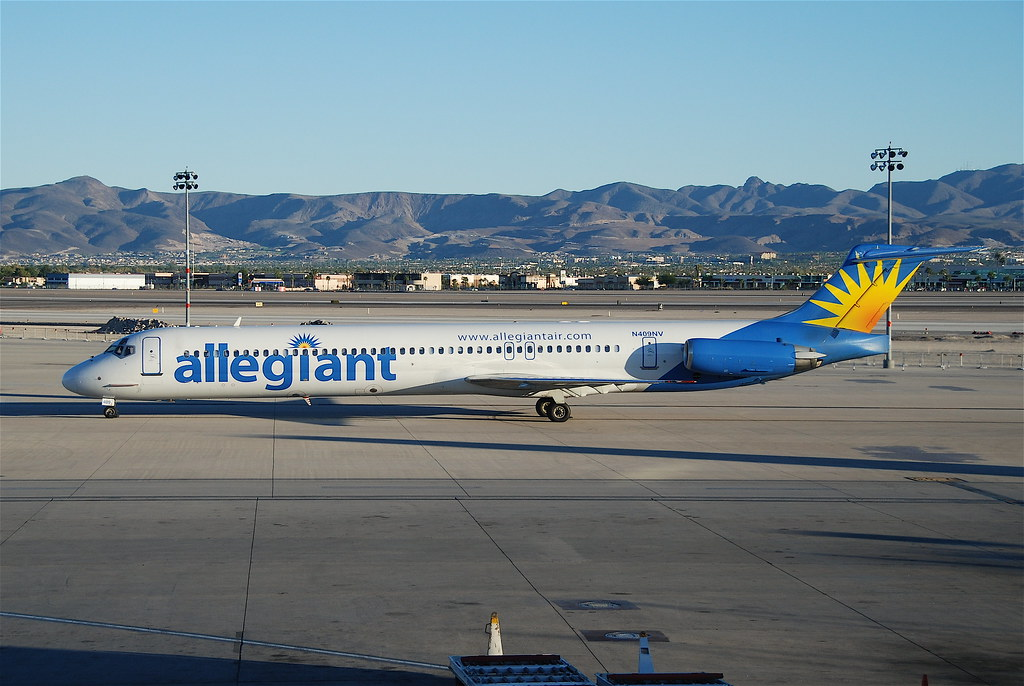
Legroom is where the two airlines diverge most obviously. Allegiant’s Airbus A319 cabin offers a seat pitch of 30 inches, while Spirit’s Airbus A320 economy seats deliver a pitch of just 28 to 29 inches, with some sources citing 31 inches on select aircraft configurations.
The practical difference of one to two inches sounds minor until you’re in the middle seat on a two-hour flight. Spirit does offer an upgrade option worth noting: the Big Front Seat, a wider, premium economy-style seat located at the front of the cabin, which provides significantly more legroom than standard economy and is available for an additional fee without a full first-class price tag.
Neither airline offers bulkhead or exit-row upgrades with the same marketing sophistication as legacy carriers, but both do charge extra for exit-row seating, which typically adds around 3 to 4 more inches of pitch.
Baggage Fees: Carry-On and Checked Luggage
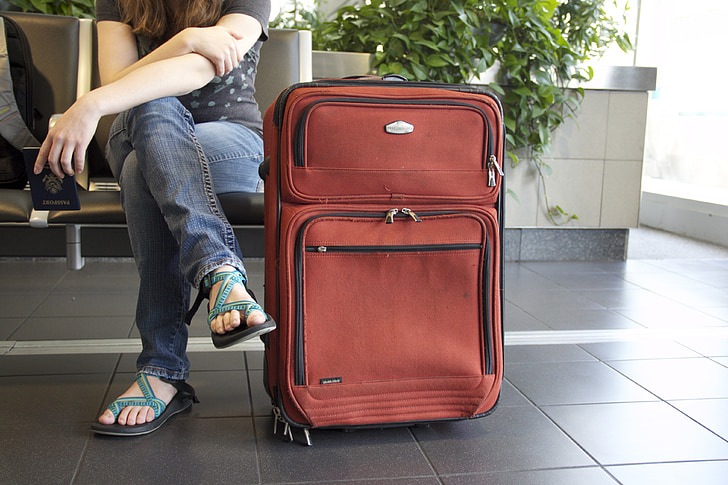
This is the area where both airlines are most frequently criticized—and where understanding the fee structure in advance can save you real money.
Allegiant allows one free personal item (maximum 8 in. x 14 in. x 18 in.). A carry-on bag runs $10 to $75 depending on the route and when you purchase it. Checked bags are similarly variable by route, with overweight bags (51–70 lbs.) incurring an additional $50 fee and bags from 71 to 100 lbs. triggering a $75 surcharge. Allegiant’s key rule: fees are lower when booked online in advance. Waiting until the airport almost always costs more.
Spirit provides one free personal item (maximum 18 in. x 14 in. x 8 in.) for all passengers. Carry-on bags and checked bags must be purchased separately under the base “Value” fare tier. The “Spirit First” fare bundle includes both a checked bag (up to 50 lbs.) and a carry-on. Spirit’s maximum accepted bag weight is 100 lbs., with a maximum size of 62 linear inches for checked bags.
On the same domestic route, both airlines often charge comparable carry-on fees when booked at check-in, but Spirit members with the Saver$ Club access discounted rates on bags, seats, and fares for $69.95 per year. For frequent travelers who fly Spirit multiple times a year, this membership can realistically pay for itself on the bag savings alone.
Check-In Protocols: Deadlines, Mobile Apps, and Airport Timing
Allegiant opens online check-in 24 hours before departure and closes it 45 minutes prior to departure—whether you’re checking in online, via the mobile app, or at the airport. Checked baggage must be dropped off at the ticket counter at least 1 hour before departure, and no more than 2 hours before. Allegiant recommends arriving at the airport at least 2 hours before your flight. The Allegiant mobile app allows passengers to check in, access boarding passes, add bags, manage seat selections, and modify reservations via the “Manage Travel” feature.
Spirit also opens online check-in 24 hours before departure, but the online window closes 1 hour before scheduled departure—15 minutes later than Allegiant. The check-in cut-off at the airport counter is 45 minutes before departure for most domestic flights, with a 60-minute cut-off for flights departing from Los Angeles International Airport (LAX) and all international routes. Spirit’s mobile app similarly provides boarding passes, bag add-ons, seat selection, and check-in functionality. Bags purchased within 24 hours of departure are charged at the online check-in rate; earlier purchases are cheaper.
One practical difference: if you miss Allegiant’s tight 45-minute window at any stage—including mobile check-in—your reservation is at risk of cancellation. Spirit’s 60-minute LAX exception reflects a more operationally complex hub, which is worth keeping in mind if you frequently fly out of Southern California.
Boarding Systems and Turnaround Efficiency
Allegiant uses a Priority Access upgrade that allows passengers to board before general boarding groups. This must be purchased in advance and is available through Manage Travel or the app. Standard boarding follows after Priority Access passengers.
Spirit uses a tiered boarding structure that includes Shortcut Boarding (an a-la-carte add-on) and separates passengers into boarding zones, with Spirit First ticket holders and elite Free Spirit members boarding earlier. Both airlines operate point-to-point, no-connection route networks, which structurally supports faster turnaround times compared to hub-and-spoke carriers. Neither publishes specific crew-to-passenger ratios publicly.
Financials and Bundles: Saver$ Club vs. Allegiant Packages
Spirit’s Saver$ Club costs $69.95 per year and provides:
- Exclusive access to the lowest available fares for the member and up to 8 guests
- Discounted bags, seats, and other a-la-carte options like Shortcut Security
- Partner savings on third-party services
The Club renews automatically at $69.95 annually unless canceled. For travelers who fly Spirit four or more times a year with bags, the math generally favors membership.
Allegiant bundles work differently. Rather than a membership, Allegiant offers vacation packages that combine flights with hotel stays and car rentals—negotiating exclusive partner rates with chains and rental agencies including Alamo, National, and Enterprise. These packages can only be purchased alongside an Allegiant flight booking and are available in most cities the airline serves. Travelers who want to book flights only will pay à-la-carte for bags and seats, similar to Spirit.
A notable difference in checkout transparency: both airlines add fees progressively through the booking flow, and neither prominently displays the total cost including bags and seat selection until the final checkout stage. Booking bags at the time of flight purchase is always cheaper than adding them later—and far cheaper than paying at the airport counter.
Aircraft Models, Fleet Age, and Fuel Efficiency
Allegiant operates a fleet that includes the Airbus A319, Airbus A320 (in multiple configurations of 177 to 186 seats), and the Boeing 737 MAX 8 (190 seats). The A319 carries approximately 156 passengers in a single-class layout.
Spirit primarily flies the Airbus A320 and Airbus A321neo, with Spirit having invested heavily in newer, fuel-efficient neo (new engine option) variants. The A320 configuration at Spirit features 29 rows of economy seating.
On fleet age, Spirit’s transition to neo-family Airbus aircraft gives it a fuel efficiency edge over older A319 and legacy A320 airframes that Allegiant continues to operate. However, Allegiant’s newer 737 MAX 8 deliveries bring comparable efficiency gains on routes where those aircraft are deployed. Exact average fleet ages shift quarterly as deliveries and retirements occur, so checking live fleet tracking databases like ch-aviation or planespotters.net will give the most current figures at time of booking.
Reliability Metrics: On-Time Performance and Cancellations
This is where Allegiant’s reputation takes a turn for the better than many budget-airline stereotypes suggest.
According to the U.S. Bureau of Transportation Statistics’ Air Travel Consumer Report for April 2024, Allegiant ranked #1 among all reporting U.S. marketing carriers with an on-time arrival rate of 85.8%—ahead of Delta (84.8%) and Hawaiian (84.0%). Allegiant also posted the third-lowest cancellation rate at just 0.5% for that month.
The Airline Quality Rating (AQR) 2024, published by Embry-Riddle Aeronautical University, provides full-year context:
| Metric | Allegiant (2024) | Spirit (2024) |
|---|---|---|
| On-time arrival rate | 76.8% | 74.5% |
| Consumer complaint rate (per 100,000 passengers) | 7.05 | 14.08 |
| AQR ranking | #4 | #8 |
Allegiant’s complaint rate has steadily improved from 7.85 per 100,000 in 2022 to 7.05 in 2024. Spirit’s complaint rate went from 10.1 in 2022, spiked to 15.57 in 2023, and improved slightly to 14.08 in 2024—still almost double Allegiant’s rate. Spirit’s operational struggles during its bankruptcy period in late 2024 likely contributed to elevated complaint volumes.
Passenger Experience: Snacks, WiFi, and Comfort
Neither Allegiant nor Spirit offers complimentary in-flight snacks or meals on standard domestic routes—both operate a buy-on-board model where snacks and drinks are available for purchase. Prices on budget carriers typically run higher per item than a convenience store, though neither airline publishes a fixed in-flight menu with prices that can be cited as a static comparison.
In-flight WiFi is not a standard feature on either airline. Spirit has offered WiFi on select aircraft but it is not fleet-wide or consistent across routes. Allegiant similarly does not provide WiFi as a standard cabin amenity. If connectivity during your flight is a priority, neither airline is a reliable option—this is one area where both carriers diverge sharply from mid-tier carriers like JetBlue or Southwest.
Loyalty Programs: Free Spirit vs. Allways Rewards
Spirit’s Free Spirit is a points-based loyalty program where members earn points on flights and partner purchases. The program includes Silver and Gold elite tiers, and the co-branded Spirit Mastercard accelerates point earning. Points can be redeemed for flights, upgrades, and bag fees.
Allegiant’s Allways Rewards program similarly allows members to earn points on flights and ancillary purchases, with points redeemable for future travel. Allegiant’s co-branded credit card also earns points on everyday purchases.
Both programs are functional but relatively limited in redemption flexibility compared to programs offered by legacy carriers. For infrequent flyers, the practical value of either loyalty program is modest unless paired with a co-branded credit card.
Same-day flight change fees are applicable on both carriers without premium fare protection. Allegiant’s Trip Flex travel protection—purchased at booking—waives change fees for modifications made at least 1 hour before departure. Without Trip Flex, change fees apply per person per segment. Spirit similarly charges change fees without fare flexibility options built into standard “Value” fares. Exact same-day change fee amounts are route- and fare-dependent and should be verified at booking.
Overbooking, Nonstop Routes, and Environmental Policies
Overbooking: Both airlines, as U.S. carriers, are subject to DOT involuntary denied boarding regulations. For Q1 2024, the industry-wide involuntary denied boarding rate was 0.27 per 10,000 passengers. Neither Allegiant nor Spirit publishes specific overbooking rates separate from DOT aggregate reporting.
Nonstop route networks: Allegiant’s model is distinctly focused on secondary and leisure markets—smaller cities not typically served by major carriers. Routes connect smaller metros directly to vacation destinations like Las Vegas, Orlando, and Florida beach towns, without a hub-and-spoke structure. Spirit operates a broader network with presence in larger cities, Latin American, and Caribbean destinations, offering more route diversity but also more exposure to hub congestion.
Environmental policies: Spirit’s investment in A320neo and A321neo aircraft translates to roughly 15–20% better fuel efficiency per seat compared to older engine variants—a meaningful operational and environmental distinction. Allegiant’s 737 MAX 8 deliveries deliver comparable fuel efficiency on routes where deployed. Both airlines benefit structurally from high-density single-class seating configurations, which distribute fuel burn across more passengers per flight.
Which Airline Should You Choose?
The right answer depends almost entirely on your travel profile.
Choose Allegiant if:
- You live near a smaller regional airport that Allegiant serves
- You want to book a vacation package with hotel and car bundled in
- On-time performance and low cancellation rates are priorities
- You travel light and can avoid checked bag fees
Choose Spirit if:
- You’re flying a high-traffic route where Spirit has more frequency
- You fly frequently enough for the Saver$ Club to make financial sense
- You want access to Latin American and Caribbean destinations
- The Big Front Seat upgrade appeals to you as a value-for-money premium option
Both carriers reward passengers who book early, purchase bags at booking, check in online, and arrive at the airport with time to spare. Waiting until the last minute—whether for bags, seats, or check-in—costs significantly more on both airlines. Plan ahead, and either airline can deliver a genuinely affordable trip.