Both destinations sit in the same state. Both offer mountain air, pine forests, and a break from the plains. But Manali and Shimla are different experiences—and choosing the wrong one for your travel style can leave you disappointed. This guide breaks down everything you need to know, from travel times to terrain, so you can pick the hill station that actually suits you.
Getting There: Accessibility and Travel
Shimla wins on ease of access. From Delhi, the road distance is around 370 km, taking approximately 8 hours by car or 9 hours by bus, according to the Himachal Pradesh District Shimla government. Chandigarh is just 119 km away—roughly 3.5 hours by car. Better yet, Shimla is one of the few hill stations with a UNESCO World Heritage train connection. The Kalka–Shimla Railway, a narrow-gauge line with 102 tunnels built between 1898 and 1903, winds 96 km through spectacular mountain terrain, taking around 6 hours. Trains like the Shivalik Express and the glass-roofed Vistadome Special make the journey an attraction in itself.
Manali is a bigger undertaking. It sits around 530 km from Delhi by road, with a journey time of roughly 12–14 hours depending on conditions. Chandigarh is 300 km away. The nearest airport is at Bhuntar, 50 km from Manali, with limited connections. There’s no direct train—the closest broad-gauge stations are Ambala Cantt (200 km) or Chandigarh (250 km), after which you continue by road. Many travelers opt for overnight Volvo coaches from Delhi, which HPTDC and private operators run regularly.
Bottom line: Shimla is easier and faster to reach. Manali demands more travel time, but the road journey through Himachal’s mountain passes is part of the adventure.
Scenic Beauty and Landscape
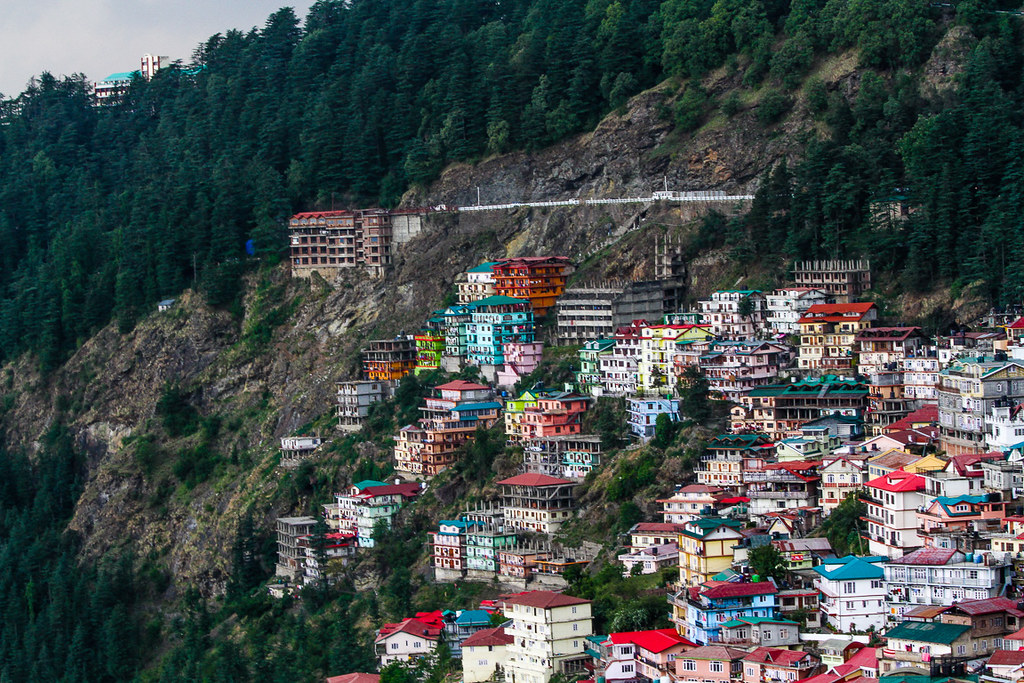
Shimla carries the weight of its history. The former summer capital of the British Empire, it’s lined with colonial-era buildings—Christ Church, the Viceregal Lodge (now the Indian Institute of Advanced Studies), Gaiety Theatre, and Gorton Castle. The Ridge and Mall Road offer panoramic Himalayan views alongside a genteel, old-world atmosphere. Surrounding forests of cedar, rhododendron, fir, and Himalayan oak soften the skyline. It’s a destination that rewards leisurely exploration.
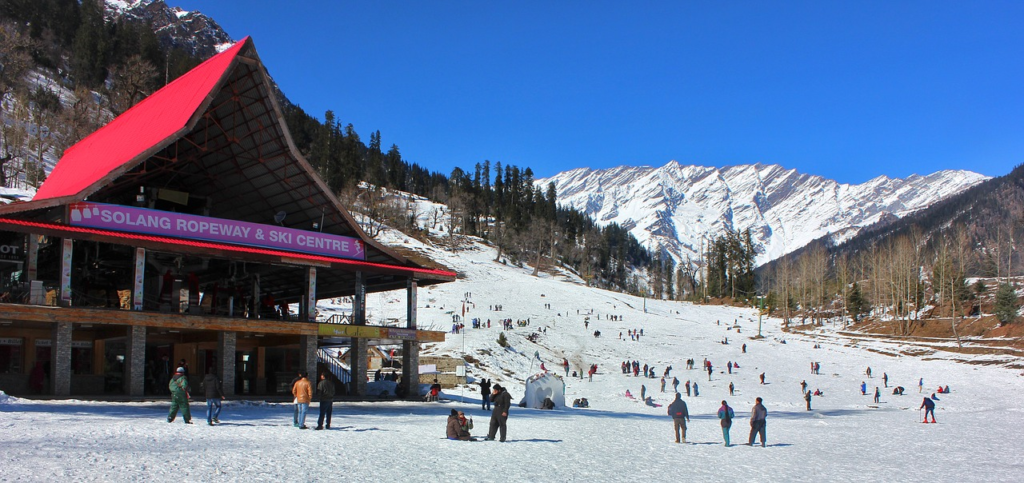
Manali trades colonial elegance for raw mountain drama. Nestled in the Beas River valley, it’s flanked by snow-capped peaks, dense deodar forests, and rushing glacial streams. The landscape shifts dramatically just outside town—from the meadows of Solang Valley to the high-altitude desert beyond Rohtang Pass. Ancient temples like Hidimba Devi (built in the 16th century) and the serene Vashisht village add cultural depth to what is otherwise a deeply nature-forward destination.
Bottom line: Shimla appeals to those who appreciate heritage and character. Manali is for those who want untamed Himalayan scenery front and center.
Activities and Adventure
This is where the two destinations diverge most sharply.
Manali is built for adventure. Solang Valley hosts paragliding, zorbing, quad-bike rides, rock climbing, and gondola rides year-round. In winter, its snow-packed slopes become venues for state and national skiing championships. Rohtang Pass—51 km from town and accessible only with a permit—offers trekking, skiing, and snowfall experiences from June to August. River Beas supports white-water rafting and river crossing. For serious mountaineers, the Atal Bihari Vajpayee Institute of Mountaineering in Manali offers courses from basic to advanced level. Old Manali, with its hippie-era cafes and backpacker vibe, adds a laid-back counter-culture edge to the mix.
Shimla offers gentler pursuits with a few active surprises. The Mall Road and Ridge are made for long strolls, people-watching, and shopping for local handicrafts. The Jakhoo Temple hike—ascending to 2,445 meters above the city—is a rewarding half-hour climb, though a ropeway makes it accessible for all. Kufri, 16 km from Shimla, houses the Himalayan Nature Park with over 180 bird and animal species, plus Fun World—home to what’s said to be the highest go-kart track in the region. The famous open-air ice skating rink near The Ridge operates through winter, hosting a carnival around Christmas and New Year. Naldehra, 23 km out, has an 18-hole golf course set amid deodar forest.
Bottom line: Manali is the clear choice for adventure travelers. Shimla suits those after scenic walks, cultural exploration, and a more relaxed pace—with some winter sports in the mix.
Weather and Best Time to Visit
Shimla enjoys a temperate climate year-round. Summers (April–June) are mild and pleasant, drawing crowds escaping the heat of the plains. Monsoon (July–September) brings romantic mists and the best views of Chadwick Falls. Winter (December–February) brings snowfall, an ice-skating season, and a completely different kind of charm. Spring (March) and autumn (September–November) offer quieter visits with thin sweaters sufficing most days.
Manali runs colder and more extreme. Summers (April–July) are the peak tourist season, with temperatures hovering around 22°–30°C—ideal for outdoor activities and road access to Rohtang Pass. Autumn (October–December) sees a quieter influx before the passes close. Winter drops temperatures well below -5°C in December and January, making it a destination for seasoned snow-seekers and skiers. The valley officially cautions visitors that weather can shift abruptly, with sudden storms causing sharp temperature drops even in summer.
Bottom line: Shimla is more accessible year-round. Manali rewards timing—summer for adventure, winter for snow sports, but shoulder seasons can be tricky.
Accommodation and Cost
Both destinations offer a wide range of accommodation, though their character differs.
Shimla leans toward colonial heritage stays, boutique guesthouses, and mid-range hotels clustered around Mall Road and the surrounding ridges. Budget travelers will find decent options in the old town and near the bus stands. The city’s status as a state capital means infrastructure—restaurants, hospitals, and transport—is well-developed.
Manali ranges from backpacker hostels in Old Manali to luxury resorts along the Beas River. Its popularity as a honeymoon destination has driven up the number of premium riverside and valley-view properties. Budget stays are plentiful, particularly in Old Manali. Food costs are generally moderate, though imported and international cuisine (popular in the Old Manali café scene) can push bills higher.
Bottom line: Budget-conscious travelers will find value in both. Shimla’s infrastructure edge makes it slightly more predictable; Manali offers a wider luxury-to-budget spread.
So, Which Should You Choose?
The decision comes down to what you want from a hill-station trip.
Choose Shimla if:
- You’re on a shorter trip and want easier access from Delhi or Chandigarh
- Colonial architecture and heritage walks interest you
- You prefer a relaxed, city-like hill-station experience
- The UNESCO toy train is on your bucket list
- You’re traveling with family or older adults
Choose Manali if:
- Adventure, outdoor sports, or skiing is the point of the trip
- You have more time and don’t mind a long road journey
- You want dramatic, high-altitude mountain scenery
- You’re traveling with friends or on a honeymoon
- You’re comfortable with unpredictable mountain weather
The great news? The two destinations are connected by road—around 280 km apart—making a combined itinerary entirely feasible for those with a week or more. Start with Shimla’s heritage, end in Manali’s mountains. That’s not a bad way to see Himachal Pradesh at all.